
Fire Training from an HR Perspective
If you work in HR on an industrial or operational site, you probably know that fire safety training matters, but it’s rarely the only thing on your plate, and it’s often one of dozens of compliance responsibilities competing for time, attention and budget. Most HR professionals we work with understand governance, risk and documentation inside out. What’s difficult isn’t the principle of fire safety training — it’s translating it into something that works in a busy, real-world environment with hundreds of people doing a huge range of jobs. Fortunately, this is exactly the kind of situation we support HR managers with every day.

Where it gets difficult
We understand that HR managers are often juggling:
Large, diverse workforces with different literacy levels, languages and learning styles.
Shift patterns that make classroom training hard to schedule.
Operations managers who want the minimum disruption to production.
Staff who have seen “training” come and go and are understandably sceptical.
On top of that, we understand that HR managers are usually expected to prove that training has happened, been understood and is being maintained, even though delivery may sit with external providers or line managers. That’s a lot to carry.
What good support actually looks like
Good fire safety training doesn’t lecture people or drown them in technical detail. It meets people where they are. For HR teams, that means working with trainers who:
Speak plainly, without jargon.
Understand industrial environments and manual roles.
Treat workers with respect rather than condescension.
Provide clear records and evidence without creating extra admin.
It also means our trainers recognise HR’s position — accountable for outcomes, but not always in control of day-to-day behaviour on the floor.
Fire Marshal training as a practical example
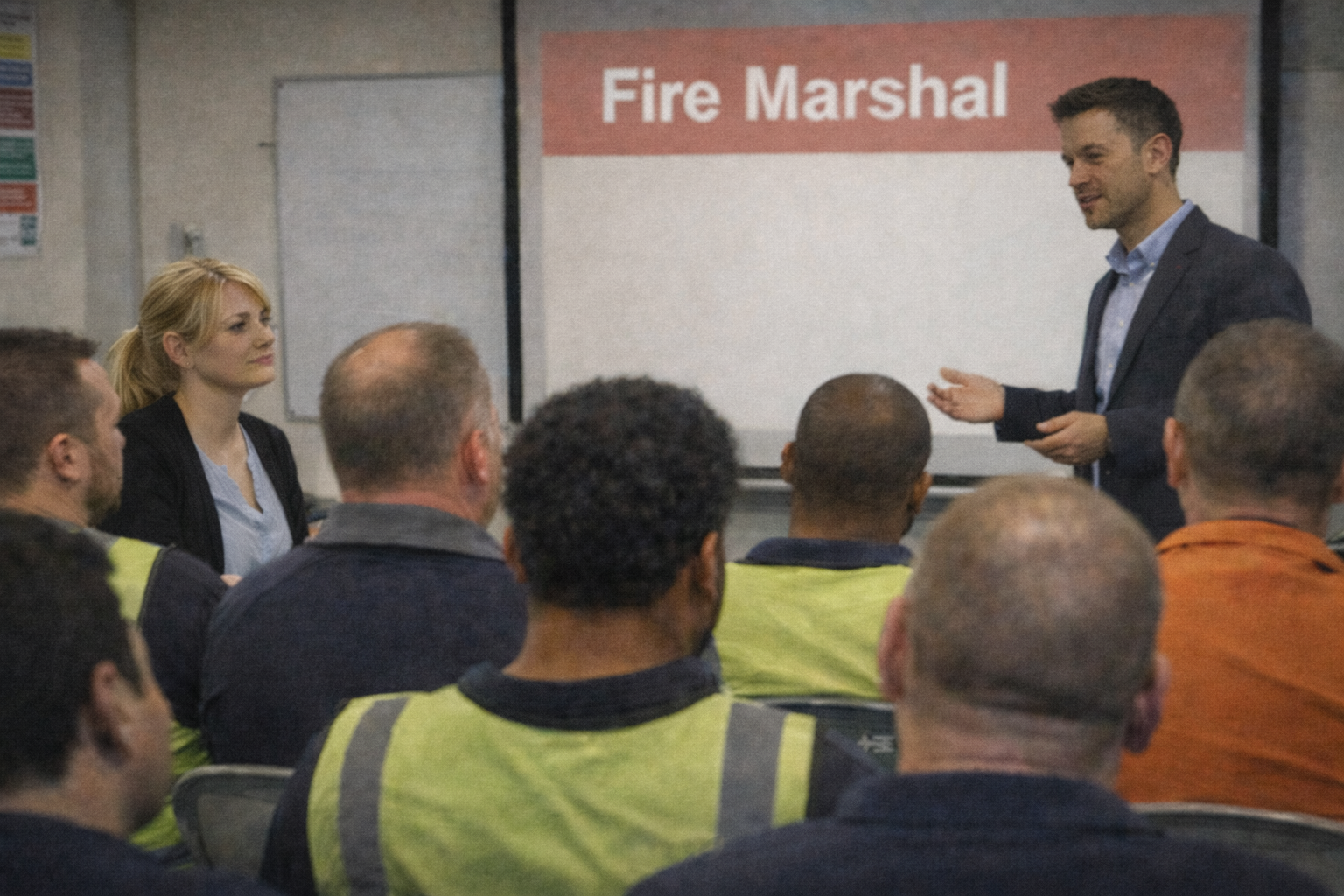
Fire Marshal training is a good illustration of this balance. Done badly, it feels like another box to tick. Done properly, it gives selected staff genuine confidence and clarity about what they’re responsible for, and what they’re not. For HR, the value is in knowing that:
The right people have been trained.
They understand their role in plain terms.
The training stands up to scrutiny if it’s ever questioned.
A partnership, not a judgement
We know that fire safety works best when HR is supported, not second-guessed. Our trainers understand the pressures of the HR role and help make compliance manageable rather than intimidating. That’s the approach we take. Calm, practical, and grounded in how workplaces actually function.
Fletcher Risk provide a wide range of fire safety training options. If you are a HR manager planning your fire safety training for the year ahead we would love to hear from you - please reach out today.

Disclaimer
This article is provided for general information and guidance only and does not constitute legal advice or a substitute for a site-specific fire risk assessment. Fire safety duties, training requirements and record-keeping obligations vary depending on the nature of the premises, the activities carried out and the people at risk. While care has been taken to ensure the information is accurate at the time of writing, legislation, guidance and enforcement practices may change. Responsibility for compliance with fire safety legislation remains with the duty holder or responsible person for the premises. Fire safety training should always be informed by a suitable and sufficient fire risk assessment and tailored to the specific risks present within each building and organisation. For professional advice specific to your premises or workforce, a competent fire risk assessor or fire safety professional should be consulted.
© Fletcher Risk Team - 13 January 2025