
What Property Podcasts Rarely Talk About: Compliance Reality
First, credit where it is due
If you spend any time in UK property, podcasts are part of the culture. They are a big reason people take action in the first place. We particularly enjoy listening to the The Progressive Property Podcast and Property Magic Podcast, because they are practical, consistent, and produced by people who have earned solid reputations as UK property investors.

They cover mindset, deal finding, negotiation, refurb, letting, scaling, and staying motivated when it gets tough. Where most of them understandably spend less time is the dull but decisive part: what happens after the deal, when the property is occupied and the legal duties become real. This is not a criticism. It is just the nature of the medium. It is much easier to talk about growth than it is to talk about compliance.
The North West opportunity is real, and the numbers support it
The North West remains attractive for property investors because you can still find a balance between purchase price, achievable rent, and demand from tenants. In Chester, average house prices increased by around 54% between 2015 and 2025. Warrington saw stronger momentum over the same period, with prices rising by roughly 59%, helped by its position between Liverpool and Manchester. Liverpool also delivered significant gains, with prices up approximately 68% since 2015, driven by regeneration, investor interest and strong rental demand. Manchester property performed even better - values increased by around 81% over the decade. So yes, there are real opportunities in our region for those investors prepared to manage their building compliance after the deal is done.
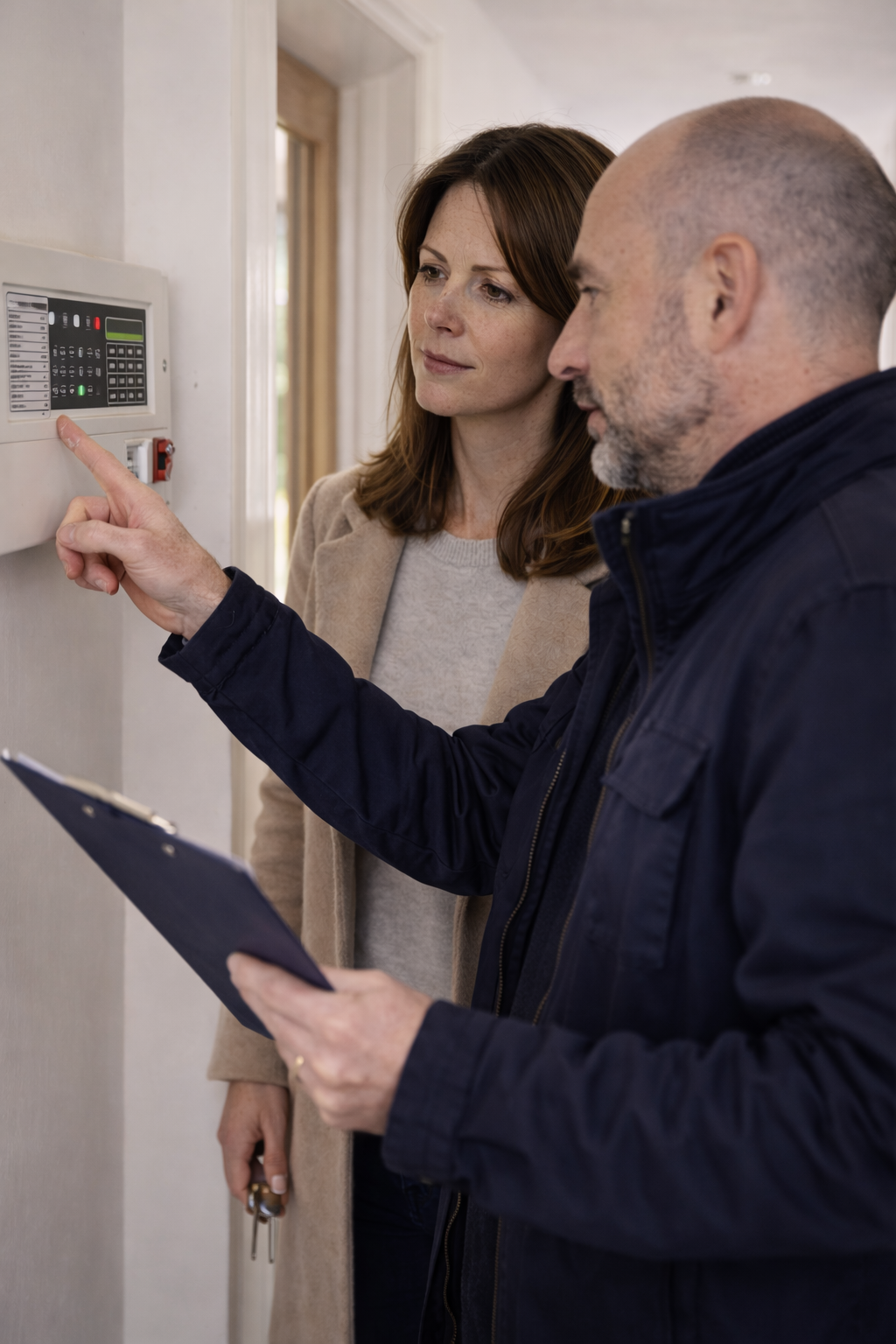
The gap between spreadsheet risk and building risk
On a spreadsheet, risk is a percentage and a contingency line. In a real building, risk is physical:
The fire alarm needs to be the correct category that matches the layout and the use.
Escape routes need to remain safe and usable.
Every fire door must be compliant.
Emergecy lighting must be sufficient and compliant.
And the list goes on…
Two HMOs with the same headline yield can have completely different risk profiles. And that is where some investors get caught out, because the fire compliance cost is not random, it is usually predictable once you understand the building and the occupancy.
Why “the installer will tell me what I need” is a common mistake
This one comes up a lot. Most competent fire alarm installers will install to a specification, and they will do that well. But the key point is that the specification should come from a competent fire risk assessment. The fire risk assessment is what determines the appropriate grade and category for the building and the occupancy. When the order is reversed, it can lead to a system that is perfectly well installed, but not the right solution. That is where the cost, delay, and embarrassment tends to appear. And it happens far more often than most people expect, including with experienced investors who were acting in good faith.
Compliance is not a one off hurdle
If the subject of fire compliance is mentioned on podcasts at all, it is usually framed as a tick box before tenants move in. In practice, fire safety is ongoing because buildings are not static. Things that commonly shift the risk profile:
Conversion from single let to HMO.
Change in tenant profile.
Layout changes during refurbishment.
Higher occupancy and higher fire loading.
Wear and tear on doors, self closers, emergency lighting, alarms.
This is why good property investors treat compliance as part of operations, not a one time admin task.

The human side that rarely makes the edit
This is the bit we wish more investors heard early. Most compliance problems are not caused by bad people. They are caused by busy people. People feel frustrated because the rules seem endless. People feel defensive because they did their best. People feel anxious because remedial works can be expensive. Our job in this process is to be calm, practical, and proportionate. To explain what matters, what can wait, and what the sensible options are. No judgement. Just clarity.

A practical way to bring “compliance reality” into your investing
Property podcasts are very good at helping people take action. What they rarely cover is what happens once a building is occupied, tenants are in place, and responsibility becomes real. If you own, manage, or are about to invest in an HMO or residential property in the North West, the most effective step you can take is to get clarity early. A competent fire risk assessment does not exist to catch people out. It exists to help you understand how your building actually behaves, where the real risks sit, and what proportionate steps make sense for your situation.
Done at the right time, it can:
Prevent expensive rework.
Avoid uncomfortable conversations later.
Support sustainable yields.
Give you confidence that decisions are defensible.
If you are planning a purchase, a refurbishment, a change of use, or simply want reassurance that things are still set up correctly, speak to us before committing to works or long term plans. It is a small investment that often saves far more in cost, time, and stress further down the line. If you would like to talk through your property, your plans, or your concerns in a straightforward, non judgemental way, we are always happy to have that conversation - just contact us today.
Disclaimer
This article is provided for general information only and does not constitute legal, technical, or professional advice. Fire safety requirements vary depending on building layout, occupancy, use, and management arrangements. What is appropriate for one property may not be appropriate for another. Any figures, examples, or scenarios referenced are illustrative and should not be relied upon as a substitute for a site-specific fire risk assessment carried out by a competent person. If you are unsure about your obligations or the suitability of fire safety measures within your building, you should seek independent professional advice tailored to your specific circumstances.
© Fletcher Risk Team - 12 January 2026