
Should Your Fire Alarm Installer Also Be Your Fire Risk Assessor?
It is a question many property managers and building owners quietly ask but rarely raise directly. Should the company that installs and maintains your fire alarm system also be the one carrying out your fire risk assessment? There is no single right answer. In some situations it can work well. In others, independence matters more than convenience. The key is understanding the difference between the two roles and knowing when separation protects you, your building and the people who use it. Fletcher Risk does work closely with a range of fire alarm installers, but always independently, and this is an important point which we will return to later.
Why the two roles are often combined
There are understandable reasons why fire alarm installers and fire risk assessors are sometimes the same organisation. Cost is one. Combining services can feel more efficient, particularly where budgets are tight. Convenience is another. One supplier, one relationship, one visit. There is also a perception that someone who understands fire alarm systems must automatically be well placed to assess fire risk. In simple, low risk buildings, this approach can appear to work without issue. But it is worth understanding what each role is actually responsible for.
What a fire risk assessor is required to do
A fire risk assessor’s job is to identify fire hazards, evaluate risk to life, and recommend proportionate control measures. This includes looking at the building layout, use, occupancy, escape routes, fire protection measures, management arrangements and human behaviour. Crucially, a fire risk assessment should consider a range of possible controls. Some will be physical, such as fire detection or compartmentation. Others will be procedural or behavioural, such as training, housekeeping, maintenance or changes in use.
The assessor’s role is to start with risk and work towards proportionate solutions, not to begin with a product or system and work backwards.

What a fire alarm installer is trained to do
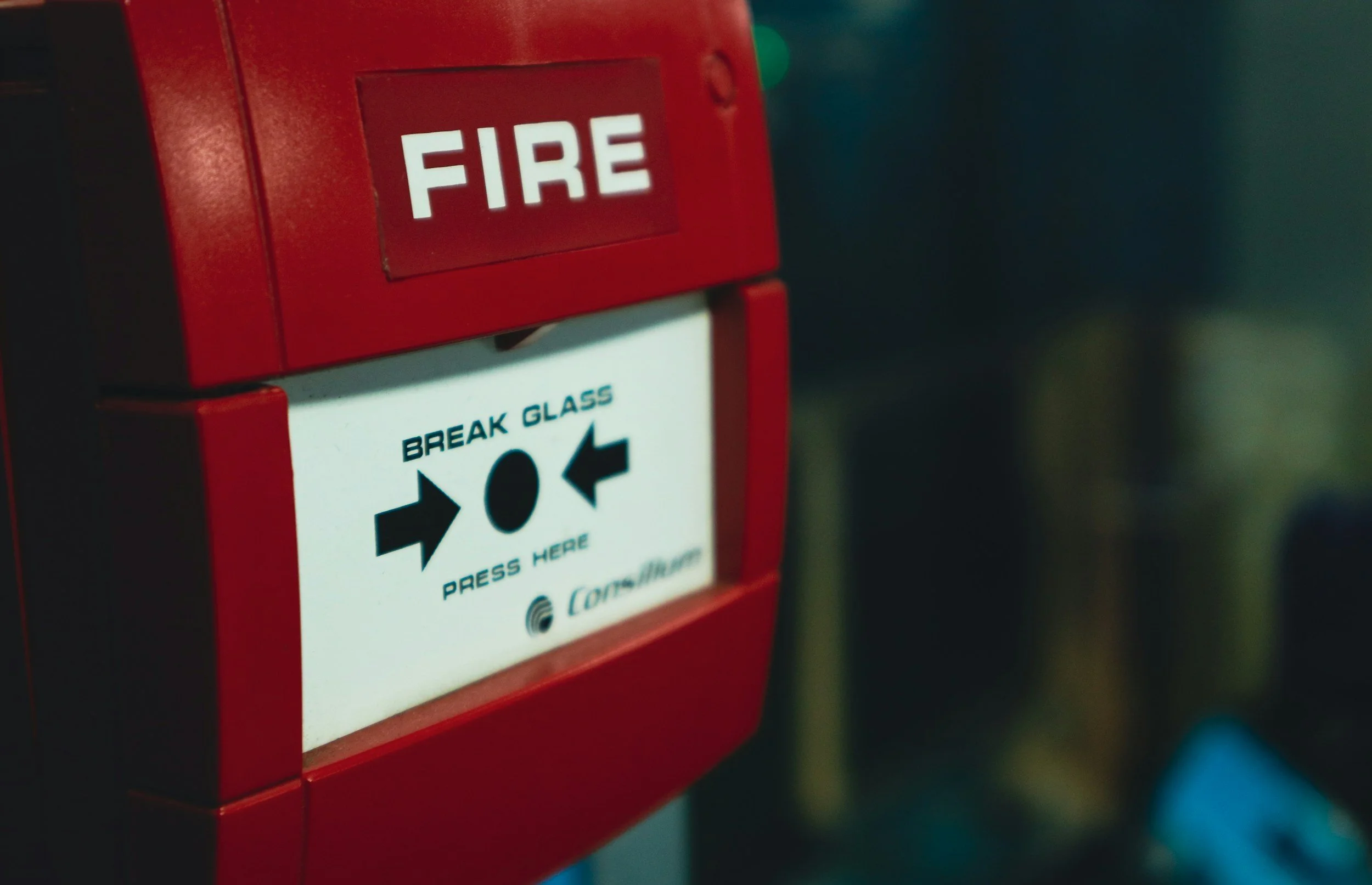
A fire alarm installer is focused on the design, installation, commissioning and maintenance of fire detection and alarm systems. Their expertise lies in standards, system performance, fault finding, and ensuring equipment functions as intended. This is a vital role. A well designed and properly maintained fire alarm system saves lives. Installers bring essential technical knowledge and practical experience of how systems behave in real buildings. However, their primary focus is understandably on alarm systems rather than the full range of fire risk controls available.
Where conflicts can arise
Problems tend to arise when assessment and solution become too closely linked. If the same organisation is identifying risk and selling the solution, there is a risk that system upgrades become the default answer. In some cases, improvements to management, training, layout or maintenance may reduce risk just as effectively, or more so, than installing higher specification equipment.
This does not mean recommendations are made in bad faith. It simply reflects how professional focus can shape decision making. When the solution appears before the risk is fully explored, it is reasonable to pause and ask whether alternatives have been properly considered.
When combining roles can work well
There are situations where one organisation fulfilling both roles can be appropriate. Smaller, straightforward premises with low occupancy and simple layouts often do not require complex judgement. Where recommendations are modest, transparent and clearly explained, combining roles may be proportionate. What matters is clarity. The assessment should clearly distinguish between what is necessary for life safety and what is optional or advisory. Any recommendations should explain why they are needed, not just what is being proposed.

When independence really matters
Independence becomes more important as risk and complexity increase. This is particularly true in higher risk buildings, mixed use premises, older stock, or buildings where significant capital works may be required. It also matters where enforcement risk is higher, or where previous assessments have led to costly recommendations without clear explanation. In these situations, having an assessor whose advice is not tied to the sale of a particular system can provide reassurance that decisions are proportionate, defensible and focused on risk rather than products.

Questions property managers should always ask
Regardless of who carries out the assessment, there are a few questions that are always worth asking:
How were the risks identified and prioritised?
What alternatives were considered?
Which recommendations are necessary and which are advisory?
How does the advice relate to how the building is actually used
Clear answers to these questions are a good indicator of quality.
How Fletcher Risk approaches this issue
Fletcher Risk does not operate in isolation from fire alarm installers. In practice, we work alongside many different installers across a wide range of buildings, often on the basis of mutual professional respect and often by their recommendation. Our role is to assess fire risk independently and set out proportionate, risk led recommendations. Where improvements to fire detection or alarm systems are genuinely required, we work with installers to help ensure those recommendations are implemented correctly and efficiently. This separation of roles allows building owners and managers to benefit from specialist technical expertise while retaining confidence that the original assessment was not influenced by the sale of a particular system. In many cases, this collaborative but independent approach leads to better outcomes, clearer decision making and fewer unnecessary upgrades.
Final thought
The right approach is rarely about choosing sides. It is about making sure the advice you receive is clear, proportionate and genuinely focused on reducing risk to life. If you ever feel uncertain about whether recommendations are driven by risk or by convenience, asking the question is not only reasonable, it is responsible. If you need help, please reach out to us.
Disclaimer
This article is provided for general information only and does not constitute legal advice. Fire safety duties and appropriate control measures depend on the specific premises, occupancy, management arrangements and findings of a suitable and sufficient fire risk assessment. If you require advice on your circumstances, you should seek competent professional support.
Fletcher Risk Team - 18 December 2025